
Walk into a classroom today, and you might notice something different. Alongside textbooks and whiteboards, teachers are using intelligent software that adapts to each student’s pace. Students are receiving instant feedback on their essays. Administrators are spending less time on paperwork and more time on people. This is not a vision of some distant future — this is AI in education, and it is already reshaping how the world learns.
Artificial intelligence is no longer confined to tech labs or science fiction. It has quietly entered schools, universities, and training centers across the globe, bringing with it a wave of transformation that touches everything: how lessons are delivered, how progress is measured, how institutions are run, and how students are prepared for careers that did not exist a decade ago.
This article explores the many dimensions of AI in education — the promise, the practice, the challenges, and the profound implications for the next generation.
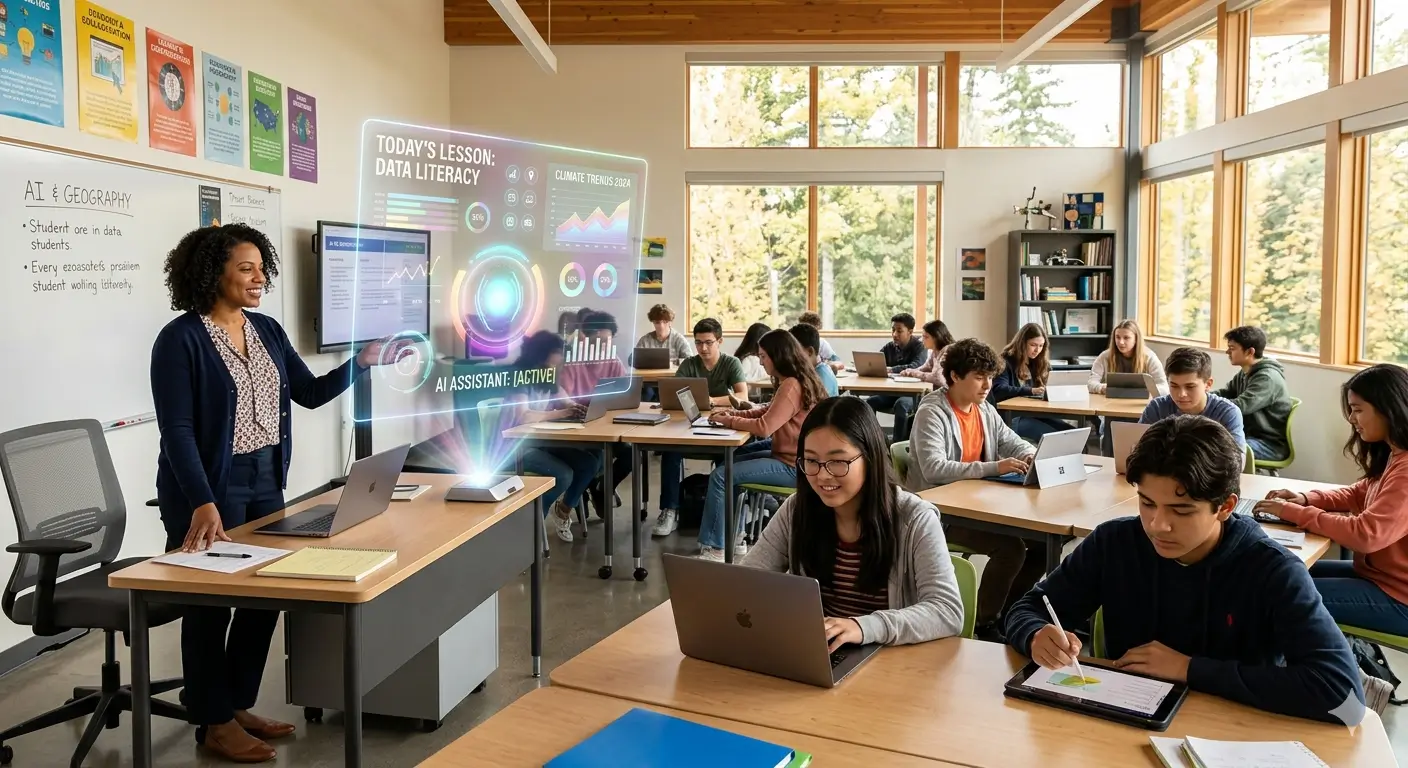
1. How AI Is Transforming the Modern Classroom
From One-Size-Fits-All to Intelligent Instruction
Traditional classrooms have always faced a fundamental tension: a single teacher, dozens of students, and a curriculum designed for the average learner. The student who grasps concepts quickly sits bored while others catch up. The student who struggles falls further behind as the lesson moves on. For generations, this was simply accepted as an unavoidable limitation of mass education.
AI in education is dismantling that assumption.
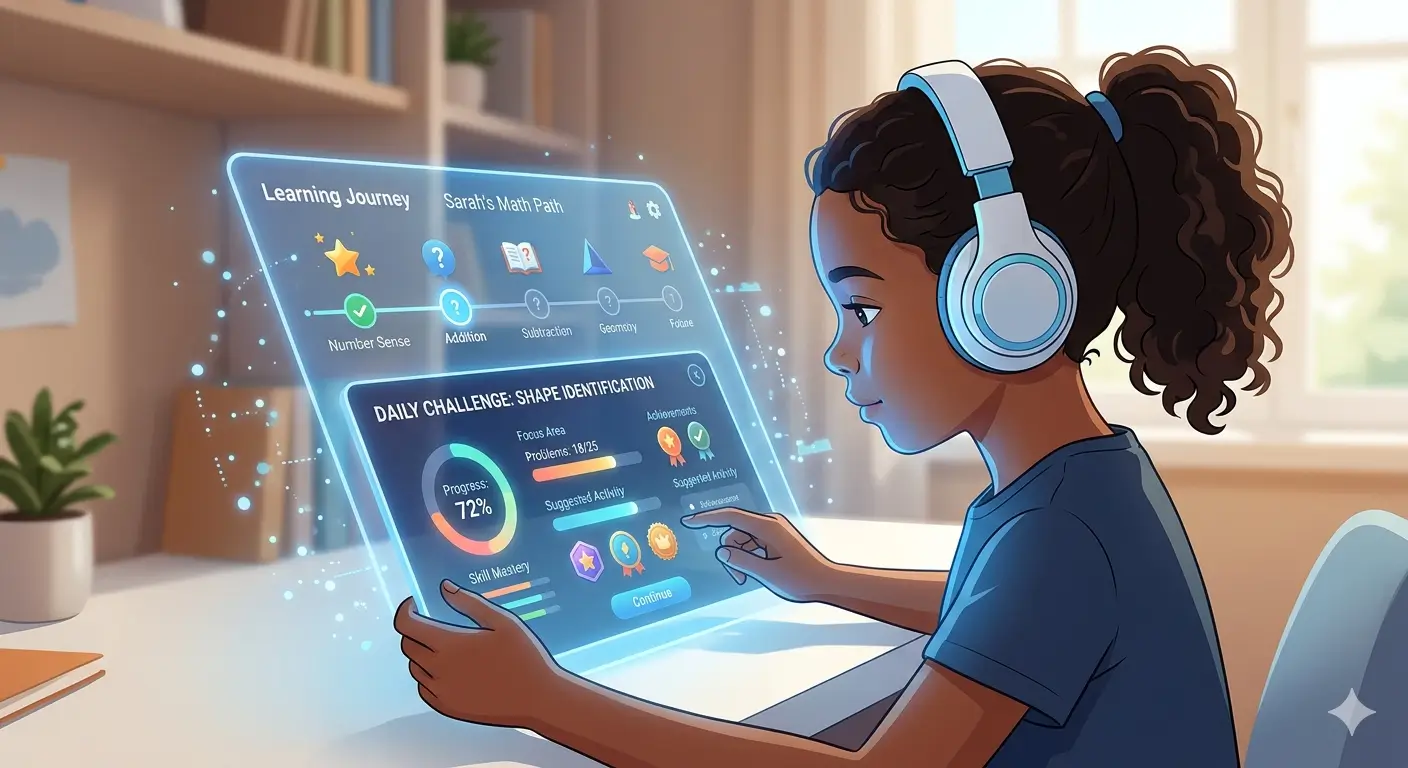
Intelligent tutoring systems — platforms like Khan Academy’s Khanmigo, Carnegie Learning, and DreamBox — use machine learning algorithms to analyze how each student interacts with content. They track which concepts a student masters quickly, where they hesitate, and what kinds of errors they make. Based on this data, the system adjusts in real time: slowing down, offering alternative explanations, introducing practice problems at just the right level of difficulty.
The result is a learning experience that feels tailored rather than generic — and the data supports its effectiveness. Research consistently shows that students using AI-powered tutoring systems demonstrate measurable gains in mathematics and reading comprehension compared to those in conventional instruction alone.
AI as a Teaching Partner, Not a Replacement
A common fear — and a persistent misconception — is that AI will replace teachers. The reality emerging from classrooms around the world is far more nuanced and, for educators, more reassuring.
AI handles the tasks that drain teacher time without adding human value: grading multiple-choice assessments, tracking attendance, generating progress reports, and flagging students who may be falling behind. This automation gives teachers something precious: time. Time to have deeper conversations with students. Time to design creative projects. Time to notice the student who is quietly struggling not with the material but with something at home.
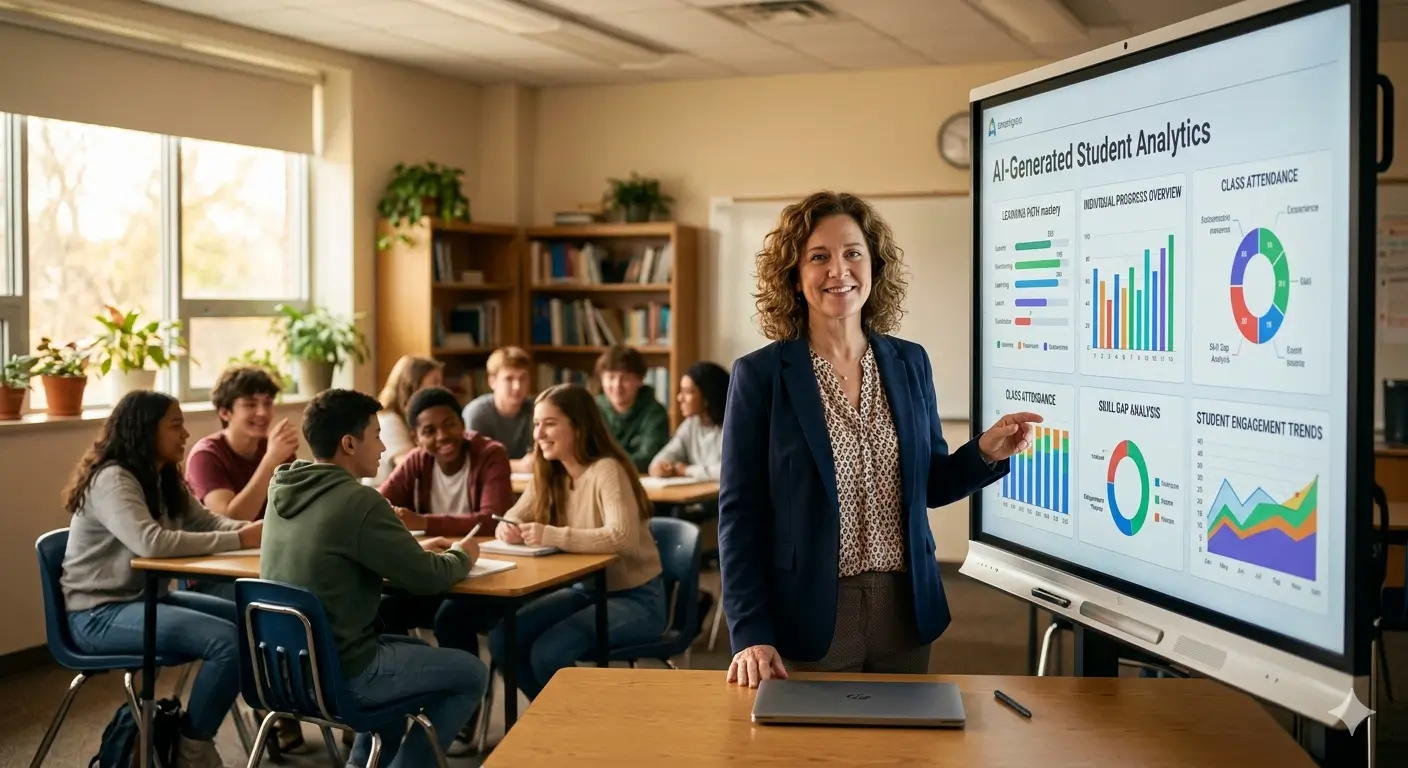
In this sense, AI in education functions best as a teaching partner — one that handles the mechanical and analytical while the human teacher focuses on the relational and inspirational dimensions of learning that no algorithm can replicate.
2. Personalized Learning: The Heart of AI in Education
What Personalized Learning Actually Means
The phrase “personalized learning” is sometimes misunderstood as simply letting students work at their own pace. In the context of AI in education, it means something far more sophisticated: a continuous, data-driven feedback loop that adjusts content, pacing, difficulty, format, and even the style of instruction based on each learner’s unique profile.
An AI-powered learning platform builds what researchers call a learner model — a dynamic representation of what a student knows, how they learn, and what they are ready to learn next. This model updates with every interaction: every correct answer, every mistake, every moment of hesitation.
Consider a student struggling with algebraic fractions. A traditional textbook offers one explanation. An AI system might try a visual representation, then a step-by-step worked example, then a real-world application involving cooking or budgeting — cycling through approaches until it finds what clicks for that specific learner.
Closing the Gap for Diverse Learners
Personalized AI learning holds particular promise for students who have historically been underserved by standardized education: students with learning disabilities, English language learners, gifted students who need greater challenge, and students in under-resourced schools with high student-to-teacher ratios.
AI tools can automatically adjust text complexity for students with dyslexia, provide audio support for struggling readers, generate content in multiple languages, and offer extended practice on foundational skills without the stigma of being “held back.” For students with autism spectrum conditions, AI tutors offer consistent, non-judgmental interaction — a significant advantage when social dynamics in the classroom can be a source of anxiety.
This democratizing potential is one of the most compelling arguments for AI in education: the possibility of high-quality, individualized instruction not just for students in well-funded private schools, but for every learner, everywhere.
Immediate Feedback: Learning in Real Time
One of the most underappreciated advantages of AI in education is the speed of feedback. In a conventional classroom, a student submits an essay on Monday and receives feedback on Friday — by which point the learning moment has passed. An AI writing assistant can offer immediate, specific suggestions: “Your thesis is unclear — consider stating your main argument in one sentence.” “This paragraph lacks a topic sentence.” “You have used this transition word five times — try varying your language.”
This immediacy is not just convenient; it is pedagogically powerful. Research in learning science consistently shows that feedback is most effective when it arrives close to the moment of practice. AI makes that kind of feedback scalable in a way no human teacher, managing thirty students, ever could.
3. Administrative Automation: Freeing Educators to Educate
The Hidden Burden of Educational Administration
Teaching is famously one of the most time-intensive professions in the world — not because of the hours spent in the classroom, but because of the hours spent outside it. Grading. Lesson planning. Parent communications. Attendance tracking. Progress reporting. Compliance documentation. Studies suggest that teachers spend, on average, only about half their working hours on direct instruction. The rest is consumed by administrative tasks.
AI in education is beginning to reclaim that time.

Automated Grading and Assessment
AI-powered grading tools have moved well beyond simple multiple-choice scanning. Natural language processing (NLP) systems can now evaluate written responses, essays, and even short-answer questions with a degree of accuracy that rivals human graders for consistency — though human review remains important for nuanced or creative work.
Platforms like Turnitin, Gradescope, and Writable use AI to provide preliminary grades and detailed feedback on student writing, flagging issues with argument structure, evidence use, grammar, and originality. Teachers review and adjust these assessments, but the bulk of the analytical work is done in seconds rather than hours.
For subjects like mathematics, coding, and science, automated assessment is even more straightforward. Systems can grade thousands of problem sets instantly, identify the most common errors across a class, and generate a report that helps teachers understand exactly where the class-wide gaps lie — and adjust tomorrow’s lesson accordingly.
Intelligent Scheduling and Resource Allocation
School administrators deal with extraordinary logistical complexity: scheduling classes, allocating rooms, managing staff assignments, tracking enrollment trends, and forecasting resource needs. AI systems are increasingly being deployed to optimize these processes.
Machine learning models can analyze enrollment patterns to predict which courses will be oversubscribed, enabling proactive scheduling adjustments. AI tools can match students with the right courses, electives, or support services based on their academic history and stated goals. Some universities are using AI to predict which students are at risk of dropping out — identifying warning signs like declining attendance, falling grades, or reduced engagement with online platforms — so advisors can intervene before a student disappears entirely.
Streamlining Communication
AI-powered chatbots and virtual assistants are handling the first tier of student and parent inquiries at institutions around the world: questions about deadlines, enrollment procedures, financial aid, course requirements, and campus services. This reduces the load on administrative staff and ensures that students get answers at any hour — not just during office hours.
4. Preparing Students for AI-Driven Careers
The World Students Are Being Prepared For
The students sitting in classrooms today will graduate into a labor market profoundly shaped by AI. The World Economic Forum estimates that AI and automation will displace millions of jobs in the coming decade — but will also create tens of millions of new ones, most of which do not yet have names. The challenge for education is not just to teach today’s skills but to cultivate the capacities that will remain valuable regardless of how technology evolves.
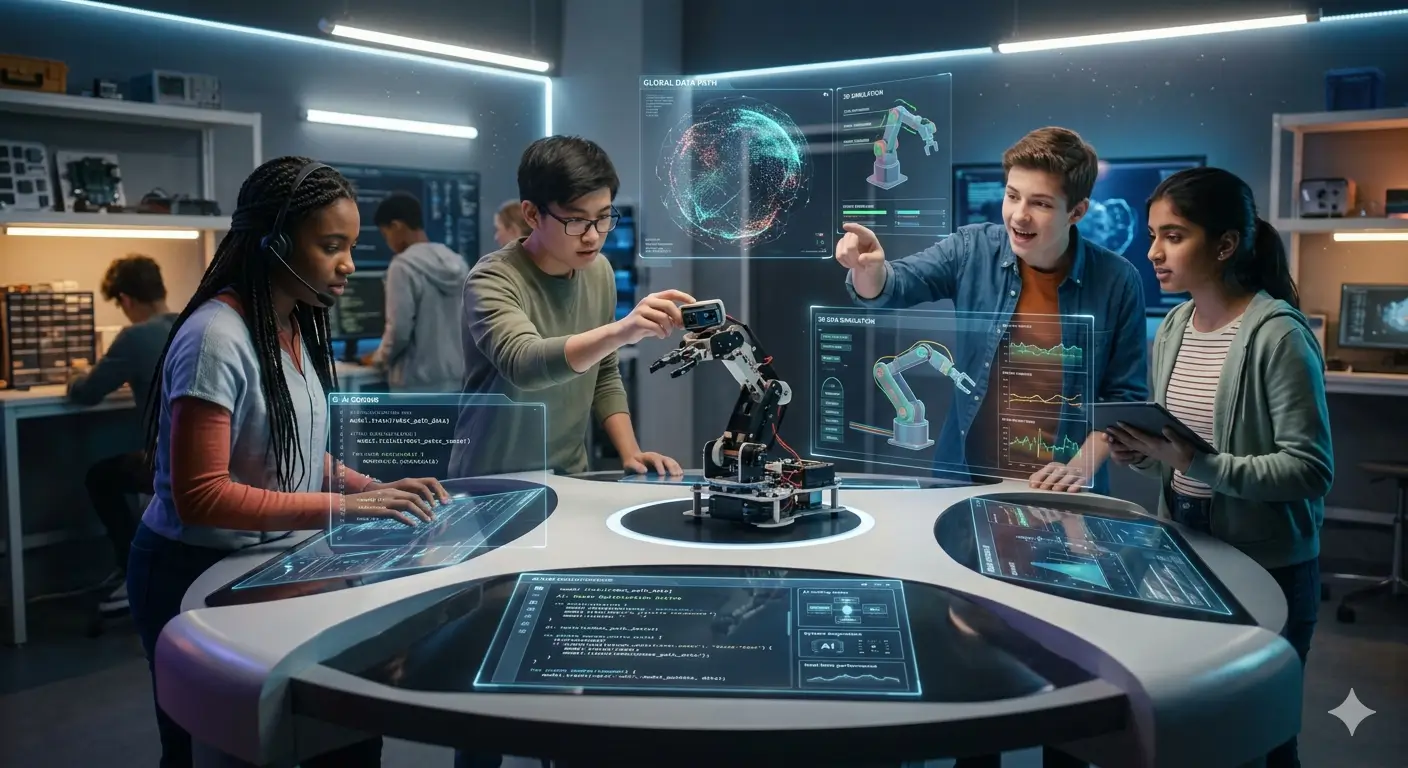
AI Literacy as a Core Competency
Just as previous generations needed to understand how to read, write, and do arithmetic, today’s students need a foundational understanding of how AI works, what it can and cannot do, and how to use it responsibly. This is what educators increasingly call AI literacy — and it is rapidly becoming as essential as digital literacy was a generation ago.
AI literacy does not mean every student needs to become a machine learning engineer. It means students should understand:
- How AI systems make decisions — and the limitations and biases those systems can carry
- How to evaluate AI-generated content critically, including recognizing misinformation or hallucination
- How to use AI tools productively across disciplines — from writing assistants to data analysis tools to creative AI platforms
- The ethical dimensions of AI — privacy, fairness, accountability, and the social consequences of automated systems
Schools that embed AI literacy across the curriculum — not just in computer science classes but in social studies, language arts, and science — are giving students a significant advantage.
Cultivating Skills That AI Cannot Replace
Even as AI becomes more capable, certain human capacities remain stubbornly difficult to automate: creative problem-solving, ethical reasoning, empathy, complex communication, and the ability to navigate ambiguity. These are not soft skills — they are essential competencies for the AI-driven economy, and they are precisely what education should be nurturing.
Forward-thinking educators are redesigning curricula to emphasize:
- Critical thinking and analytical reasoning — the ability to interrogate information, evaluate evidence, and construct well-reasoned arguments
- Creativity and innovation — designing new solutions, asking original questions, and thinking across disciplinary boundaries
- Collaboration and communication — working effectively with others, including understanding how to work alongside AI tools as partners
- Adaptability and lifelong learning — the willingness and ability to keep learning as tools and contexts change throughout a career
Paradoxically, AI in education itself helps develop these skills — by freeing students from rote memorization and routine tasks, leaving more space for the kinds of deep, creative, collaborative learning that machines cannot replicate.
STEM, Coding, and Beyond
Demand for professionals who can build, maintain, and improve AI systems is growing faster than education systems can produce them. Schools are responding with expanded coding education, data science courses, robotics programs, and AI-specific electives. Initiatives like Code.org, MIT’s AI curriculum for middle schoolers, and Google’s Teachable Machine project are making AI education accessible even to young children.
But the future of work is not exclusively technical. Healthcare professionals who understand AI diagnostic tools, lawyers who can evaluate algorithmic accountability, teachers who can leverage intelligent platforms, marketers who can interpret machine-generated insights — every profession will require workers who can collaborate with AI intelligently and critically. Education must prepare students for all of these roles, not just the engineering ones.
5. Challenges and Ethical Considerations
The Data Privacy Dilemma
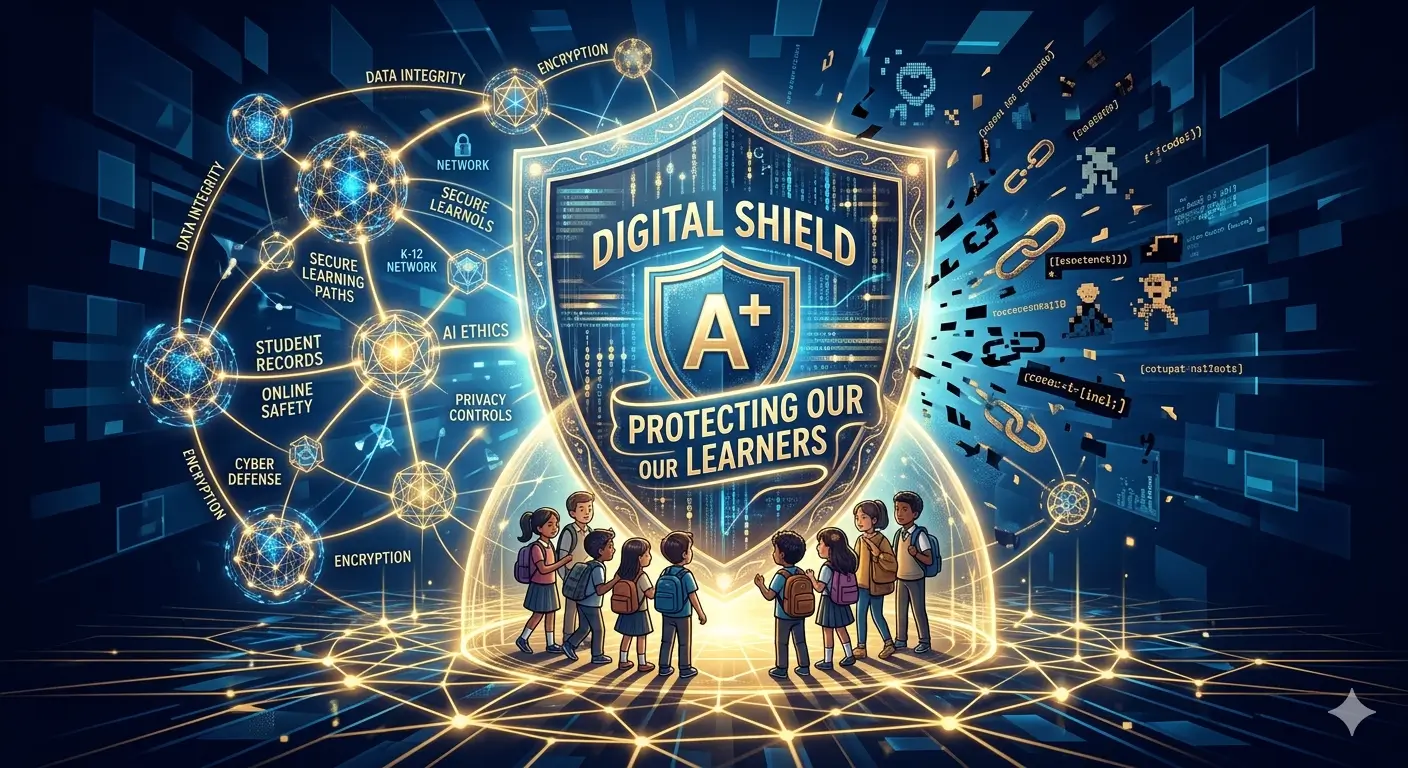
AI in education runs on data — vast quantities of it. Learning platforms track every click, every answer, every moment of hesitation. This granular data is what makes personalization possible, but it also raises serious questions about privacy, consent, and the long-term consequences of maintaining detailed behavioral profiles of children.
Who owns this data? How long is it retained? Who can access it? Can it be used for purposes beyond education — by insurance companies, employers, or law enforcement? These are not hypothetical concerns. They are live policy debates in legislatures and courtrooms around the world, and the answers will significantly shape how AI in education develops.
Algorithmic Bias and Equity
AI systems learn from historical data, and historical data reflects historical inequities. If AI grading tools are trained primarily on essays by certain demographic groups, they may systematically undervalue writing styles more common in other communities. If predictive dropout tools are trained on data from schools in wealthy districts, they may perform poorly in under-resourced settings. If facial recognition tools used for attendance or proctoring perform less accurately on darker skin tones — a well-documented technical problem — the consequences for affected students can be significant.
Equity must be a central design consideration in educational AI, not an afterthought. That requires diverse teams building these systems, rigorous testing across demographic groups, and meaningful oversight by educators and communities.
The Risk of Widening the Digital Divide
AI in education requires infrastructure: reliable internet access, modern devices, technical support. Where these exist, AI can be a powerful equalizer. Where they do not, it can widen the gap between well-resourced and under-resourced schools. Ensuring that the benefits of AI in education reach all students — not just those in affluent districts or developed nations — is one of the defining equity challenges of the coming decade.
Maintaining the Human Heart of Education
Perhaps the deepest concern about AI in education is more philosophical than technical. Education is not merely about transferring information or developing skills. At its best, it is a deeply human endeavor: a relationship between a curious young mind and a caring, experienced guide. It is about belonging, inspiration, mentorship, and the slow development of character and identity.
AI can support that process. It cannot replace it. The risk is not that AI will take over education — it is that, in the rush to automate and optimize, institutions might lose sight of what makes learning truly transformative: human connection.
6. Real-World Examples: AI in Education Today
Khan Academy’s Khanmigo — An AI tutoring assistant that engages students in Socratic dialogue, helping them work through problems rather than simply providing answers, while also assisting teachers with lesson planning and feedback.
Carnegie Learning’s MATHia — An adaptive math platform used by millions of students in the United States, which builds individualized skill sequences and provides detailed teacher dashboards showing exactly where each student needs support.
Duolingo — The language learning platform uses AI to adapt lesson difficulty, predict which words a user is likely to forget, and gamify practice in ways that maximize long-term retention — serving hundreds of millions of learners globally.
Coursera and edX — Major online learning platforms using AI to recommend courses, personalize learning paths, and even provide AI-powered peer feedback at scale.
Gradescope — A grading tool used by universities worldwide, which uses AI to group similar student responses together, dramatically speeding up assessment while maintaining consistency.
Conclusion
AI in education is not a trend. It is a transformation — one that is already well underway and will deepen significantly in the years ahead. It is changing how students learn, how teachers teach, how institutions operate, and how young people are prepared for the world they will inherit.
The promise is extraordinary: genuinely personalized learning for every student, regardless of background; teachers empowered to focus on what they do best; administrative systems that work efficiently so resources can flow toward learning; and graduates equipped not just with knowledge but with the adaptive, critical, creative capacities to thrive in an AI-driven economy.
But the promise will only be realized if educators, policymakers, technologists, and communities make deliberate choices — about equity, privacy, ethics, and the enduring importance of human connection in the learning process.
The future of education is not AI or teachers. It is AI and teachers, working together, in service of something that has always been at the heart of the enterprise: helping every young person become more fully themselves, ready to contribute to a world that needs their best.
