
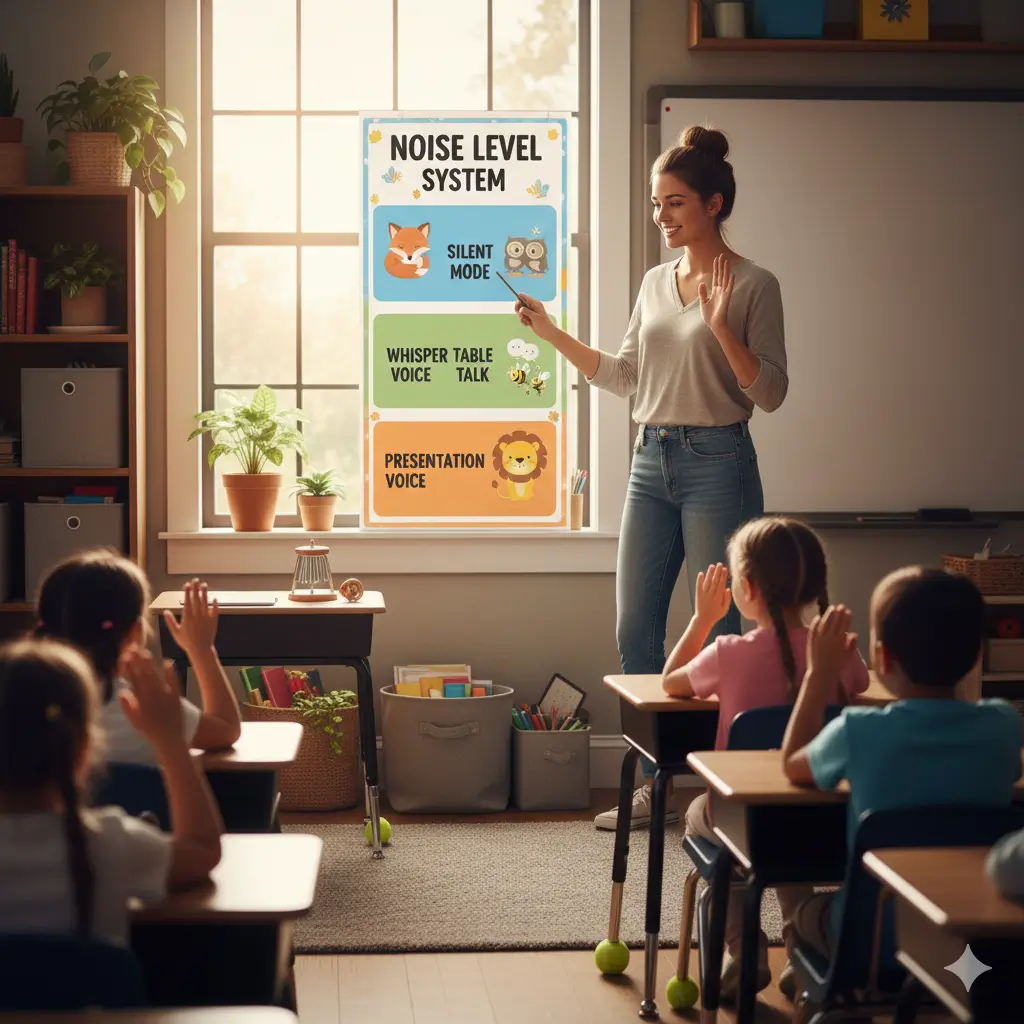
Excessive classroom noise can disrupt learning and make it difficult for students to concentrate. However, to reduce classroom noise doesn’t require punitive measures.
Rules to Reduce Classroom Noise
Here are effective, positive strategies teachers can use:
Create Clear Expectations
Start by establishing what appropriate noise levels look like for different activities. Introduce a simple visual system like a noise-level chart (silent, whisper, conversation, presentation) so students understand when different volumes are acceptable. When students know what’s expected, they’re more likely to self-regulate.
Use Non-Verbal Signals
Develop quiet cues that signal it’s time to lower voices. This might be raising your hand (students raise theirs when they notice and stop talking), turning off the lights briefly, or using a chime. These work because they don’t add to the noise and become automatic with practice.
Design the Physical Space Thoughtfully
Arrange furniture to minimize noise travel. To absorb sound, use acoustic panels, rugs, or drapes. Create designated quiet zones and collaborative areas so students understand where different noise levels belong. Even simple changes like tennis balls on chair legs can significantly reduce scraping sounds.
Build in Movement and Release
Sometimes noise happens because students have pent-up energy. Incorporate brief movement breaks, stretching, or transition activities. When students have regular outlets for energy, they’re naturally calmer during focused work time.
Make Noise Levels Part of Activities
Turn volume awareness into a game or challenge. Can the class transition to groups within a certain decibel level? Can they maintain whisper voices during partner work? This frames noise reduction as a skill to develop rather than a rule to enforce.
Model and Practice
Demonstrate the voice levels you want to hear. Practice transitions and activities where noise control matters. Students benefit from rehearsing what appropriate volume sounds like, especially younger learners who are still developing this awareness.
Address Underlying Needs
If a classroom is consistently noisy, consider whether students are engaged with the work, understand the material, or have opportunities for social interaction. Sometimes excessive noise signals that instructional adjustments are needed.
The goal isn’t silence—it’s creating an environment where everyone can learn comfortably. These approaches treat students as partners in maintaining a productive classroom rather than problems to be controlled.

2 Responses