
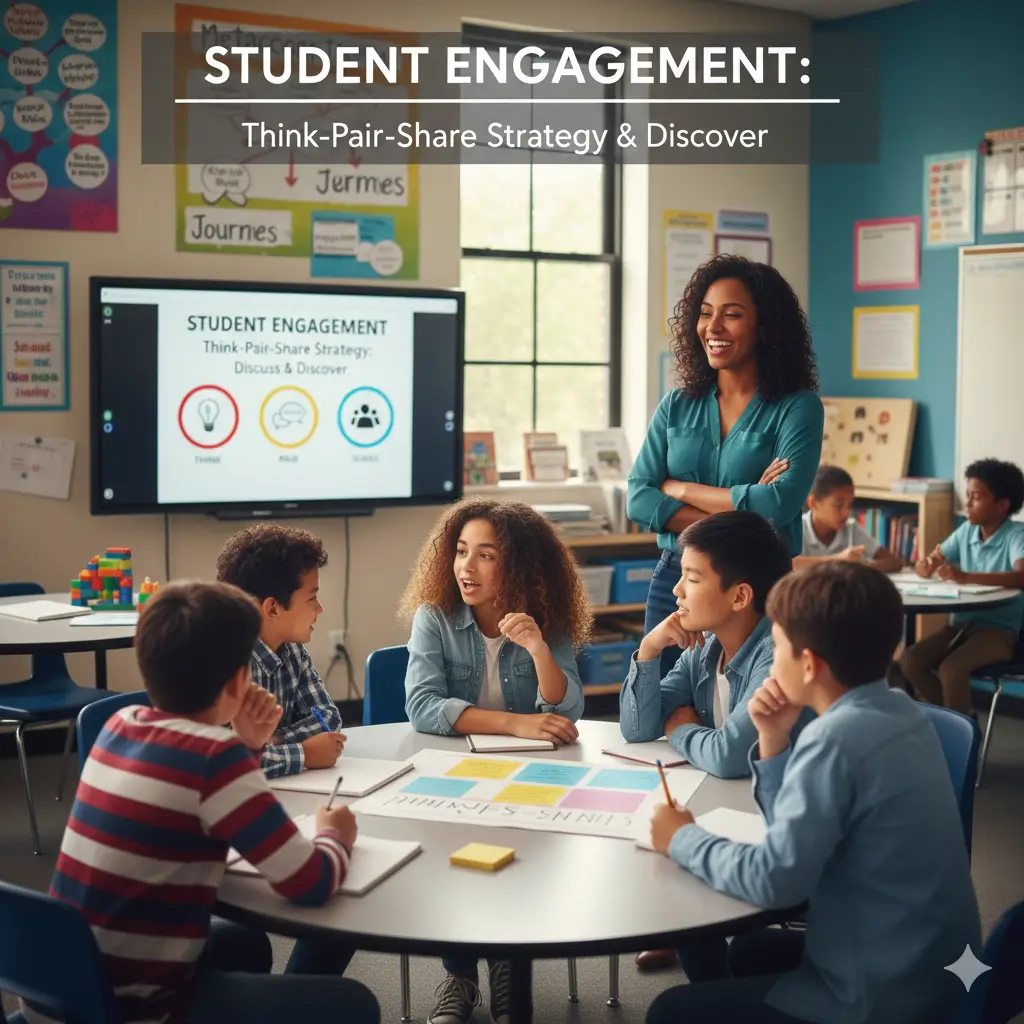
Student engagement has emerged as one of the most critical factors in educational success. Research shows engagement is widely believed to be a critical prerequisite to student attendance, behavior, learning, and graduation. According to a 2018 Gallup Study, engaged students are significantly more likely to be hopeful about their future compared to their disengaged peers. But what exactly makes the difference between a classroom where students are mentally present and one where they’re merely physically present?
Top teachers understand that engagement isn’t accidental—it’s the result of deliberate, research-backed strategies that transform passive listeners into active learners.
Understanding the Three Dimensions of Engagement
Before diving into specific techniques, it’s essential to understand that student engagement encompasses three interrelated dimensions: behavioral engagement, cognitive engagement, and emotional engagement. Behavioral engagement focuses on participation in academic and social activities, cognitive engagement centers on students’ investment in learning, and emotional engagement addresses students’ reactions to teachers, classmates, and the learning environment itself.
Effective teachers recognize all three dimensions and employ strategies that address each one, creating a holistic approach to classroom engagement.
1. The Think-Pair-Share Strategy: A Foundation for Participation
One of the most powerful and versatile engagement techniques is the Think-Pair-Share strategy, developed by Frank Lyman in 1981. This simple three-step process has stood the test of time because it works.
How it works:
- Think: The instructor poses a challenging question and gives students one to three minutes to think individually and formulate their thoughts
- Pair: Students discuss their ideas with a partner, refining their thinking through dialogue
- Share: Selected pairs share their insights with the entire class
Think-Pair-Share allows students the time and structure for thinking about a given topic, and it can be implemented at the beginning of a course to break the ice, during lectures to improve engagement, or at the end of class to reflect on content mastery.
The beauty of this technique lies in its inclusivity. By providing thinking time, teachers give all students—not just those who process quickly—an opportunity to formulate responses. The pair discussion creates a low-stakes environment for practicing ideas before sharing with the larger group, which significantly reduces anxiety and increases participation rates.
Research shows that providing students with time to think independently improves the complexity of their responses and increases their willingness to share ideas with others. The pair discussion allows students to recall, process, and communicate what they’ve learned in a supportive environment.
2. Background Knowledge Probes: Meeting Students Where They Are
Top teachers never assume what students know. Instead, they use background knowledge probes to assess prior understanding and adjust their instruction accordingly.
Background-knowledge probes help instructors decide what to cover in limited time, ensuring that subsequent meetings will better engage students, and can even generate discussion in the moment. These informal assessments can take many forms: quick polls, opening questions, concept maps, or brief writing prompts.
By starting where students actually are—rather than where the curriculum assumes they should be—teachers create relevance and prevent the disengagement that comes from material that’s either too advanced or too elementary.
3. Creating a Culture of Psychological Safety
Perhaps the most fundamental technique used by master teachers is establishing an environment where intellectual risk-taking is encouraged and failure is reframed as learning.
The classroom environment is inherently a riskier one based on intellectual commitment and engagement, which can be intimidating for many students. A key step to promoting student engagement is recognizing and addressing the fear of failure and judgment by both instructors and peers.
Practical strategies include:
- Asking questions that invite interpretation and opinion rather than single correct answers
- Establishing classroom norms collaboratively with students
- Responding to incorrect answers constructively by acknowledging effort and using them to refine questions
- Explicitly teaching and modeling respectful discourse
- Demonstrating vulnerability by sharing your own learning journey
When students feel safe to take intellectual risks, engagement naturally increases.
4. Leveraging Peer Teaching and Student Expertise
Research consistently demonstrates that one of the most effective ways to learn something is to teach it to someone else. Many studies underscore the effectiveness of learning techniques that utilize student experts or require students to practice teaching what they learn.
Top teachers create opportunities for students to become the experts. This might involve:
- Having students who grasp a concept first explain it to classmates
- Implementing peer review processes with clear expectations
- Creating student-led discussion sessions
- Assigning roles where students present on specific topics
When a student successfully explains a difficult concept to peers, it reinforces their own understanding while providing a fresh perspective for other learners. The key is ensuring that peer teaching is structured and supported, not just random group work.
5. Diversifying Instructional Methods
To engage the broadest population of students, instructors may be best served by using a variety of active-learning strategies from class session to class session. For each strategy, some students will be out of their comfort zones, and other students will be in their comfort zones.
Effective teachers recognize that student learning preferences vary widely. Some students are more reflective learners who benefit from quiet thinking time, while others learn best through verbal processing. Still others prefer visual representations like diagrams and concept maps.
By rotating through different approaches—lectures paired with discussions, individual reflection followed by group work, visual representations alongside written explanations—teachers ensure that over time, all students have opportunities to engage in ways that feel natural to them while also developing skills in less familiar modalities.
6. Strategic Wait Time: The Power of Pause
In an era of instant responses, one of the most counterintuitive yet powerful techniques is simply waiting. Research on wait time reveals remarkable benefits when teachers pause after asking questions.
After posing a question, top teachers insist on a pause of 15-20 seconds before accepting responses. This simple act:
- Allows more students to formulate thoughtful answers
- Increases the complexity and quality of responses
- Gives processing time to students who think more slowly
- Signals that thoughtful responses are valued over quick ones
Predictability is safe, but it can get boring. After asking a question, letting students think it over leads to more considered responses that drive engaging discussions, and makes the conversation accessible to those who don’t have an instant answer.
7. Authentic Connections to Student Lives and Real-World Applications
Students engage most deeply when they see relevance to their own lives and future goals. Top teachers consistently make explicit connections between course content and real-world applications.
This involves:
- Beginning lessons with hooks that connect to current events or student experiences
- Inviting students to share their own stories and perspectives
- Using case studies from actual situations
- Showing how concepts apply beyond the classroom
- Connecting content to students’ cultural backgrounds and communities
The stories you tell in your classroom can be about your own intellectual path, your research, about people who have lived through different historical eras. Whatever their type or shape, tell stories. Your students also have relevant stories to tell—inviting these stories demonstrates your interest in them and their potential for contribution.
8. Low-Stakes Formative Assessments
Short reflections on class material or participation in classroom discussions can easily be turned into credit-upon-completion components of a course. These informal assignments hold students accountable for doing work and can prepare students to think critically in advance of more important graded assessments without presenting significant intellectual risk.
Examples include:
- Exit tickets asking students to summarize key learnings
- Minute papers responding to a prompt
- Self-assessment activities with reflection
- Quick comprehension checks during instruction
- Concept sketches or visual representations
These low-stakes assessments keep students actively processing information while providing teachers with valuable feedback about understanding—all without the anxiety that comes with high-stakes testing.
9. Strategic Use of Choice and Autonomy
When students have agency in their learning, engagement increases dramatically. When given choice by teachers, students perceive classroom activities as more important, and providing students academic choices increases engagement.
This doesn’t mean abandoning learning objectives. Instead, top teachers offer structured choice within a framework:
- Allowing students to choose among different project formats to demonstrate understanding
- Offering multiple pathways to reach the same learning goal
- Letting students select topics within a required subject area
- Providing options for how to engage with content (reading, video, discussion, hands-on)
- Involving students in co-creating classroom norms and expectations
10. Building Genuine Relationships Through Teacher Presence
All the techniques in the world won’t work without the foundation of authentic relationships between teachers and students. The most general influence on a student’s emotional engagement is a teacher’s positive demeanor. Research found teacher support was consistently the strongest predictor of motivation among students.
Top teachers demonstrate this through:
- Greeting students by name at the door
- Showing genuine interest in students’ lives and wellbeing
- Being present and attentive during class
- Responding to student questions with respect and curiosity
- Demonstrating enthusiasm for the subject matter
- Following up individually with students who are struggling
- Celebrating student successes, both big and small
11. Metacognitive Practices: Teaching Students to Monitor Their Own Learning
Metacognition is useful for student learning and mastery as well as building and sustaining motivation to learn. Providing students with feedback on key assignments and creating activities in which students can conduct self-assessment supports engagement.
Effective teachers explicitly teach students to think about their own thinking. This might include:
- Modeling internal thought processes aloud
- Having students reflect on what strategies helped them learn
- Teaching students to identify when they’re confused and what to do about it
- Creating opportunities for self-evaluation before final assessments
- Discussing the learning process, not just the content
When students understand how they learn best, they become more engaged and more effective learners.
12. The Power of Classroom Community and Collaboration
How instructors structure small-group interactions has the potential to provide a feeling of inclusion, community, and collaboration for students who may otherwise feel isolated in a classroom.
Top teachers intentionally build classroom community through:
- Rotating group assignments so students work with different peers
- Establishing clear norms for respectful collaboration
- Creating structured roles within groups
- Teaching collaboration skills explicitly
- Celebrating collective achievements
- Building in opportunities for students to learn about each other
Putting It All Together
The most effective teachers don’t rely on a single magic technique. Instead, they draw from a toolkit of evidence-based strategies, adapting to their students’ needs, the content being taught, and the dynamics of each particular class.
The common thread among all these techniques is a fundamental shift from teacher-centered instruction to student-centered learning. Top teachers see themselves not as the “sage on the stage” but as designers of learning experiences and facilitators of student discovery.
They understand that engagement isn’t about entertainment or making learning “fun” in a superficial sense. Rather, it’s about creating conditions where students feel safe to take risks, see relevance in what they’re learning, have opportunities to process and practice, and feel genuinely connected to a community of learners.
A Call to Continuous Improvement
Perhaps the most important characteristic of top teachers is their commitment to continuous reflection and improvement. They regularly assess what’s working, seek student feedback, collaborate with colleagues, and stay current with educational research.
Student engagement isn’t a destination—it’s an ongoing practice that requires attention, intention, and adaptation. By implementing these research-backed techniques and remaining responsive to student needs, any teacher can create a classroom where students don’t just show up, but truly engage in the transformative work of learning.
References and Further Reading:
The strategies discussed in this article are drawn from extensive research in education, including work from institutions such as Stanford’s Teaching Commons, the National Survey of Student Engagement, peer-reviewed journals in educational research, and evidence-based practice guides. Teachers interested in deepening their understanding of student engagement should explore the work of researchers like Kimberly Tanner, Frank Lyman, and organizations such as the National Dropout Prevention Center.

3 Responses