
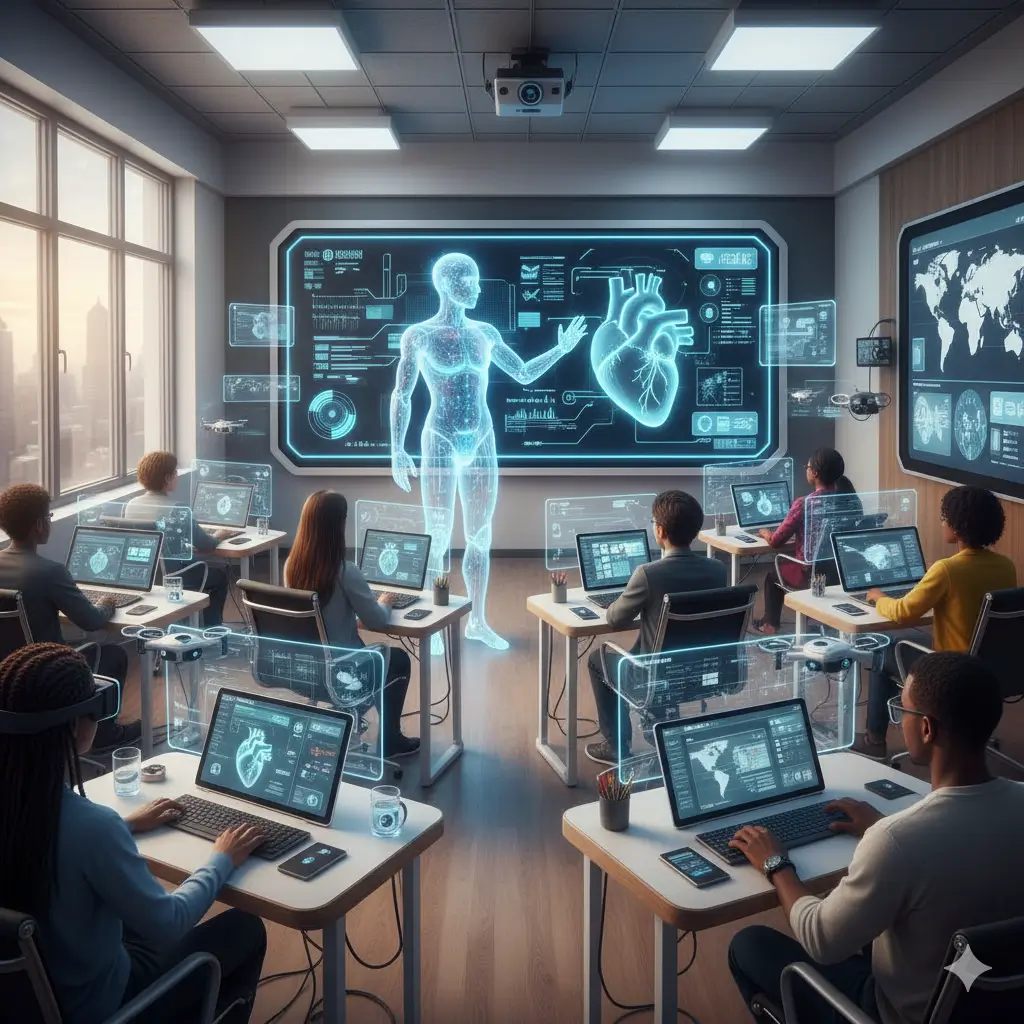
Artificial intelligence is rapidly transforming educational landscapes worldwide, and Pakistan is no exception. Despite facing challenges such as limited infrastructure and resource constraints, the country is witnessing a gradual but significant shift in how students learn and teachers instruct, thanks to AI-powered innovations. we discuss in detail how Ai is changing education in Pakistan.
The Current State of Education in Pakistan
Pakistan’s education system has long grappled with issues including overcrowded classrooms, teacher shortages, and disparities between urban and rural access to quality education. With a population exceeding 250 million and a literacy rate hovering around 60%, the country faces enormous pressure to modernize its educational framework. AI presents both an opportunity and a necessity in addressing these systemic challenges.
Personalized Learning Experiences
One of the most promising applications of AI in Pakistani education is personalized learning. Traditional classroom settings often follow a one-size-fits-all approach, leaving struggling students behind while failing to challenge advanced learners. AI-powered platforms can now analyze individual student performance, identify learning gaps, and adapt content accordingly.
Several Pakistani edtech startups have emerged to fill this gap. These platforms use machine learning algorithms to create customized learning paths, allowing students to progress at their own pace. This is particularly valuable in a country where student-to-teacher ratios can exceed 40:1 in many government schools, making individual attention nearly impossible through traditional methods.
How Ai Is Changing Education in Pakistan: Language Processing and Accessibility
Language barriers have historically limited educational access in Pakistan, where Urdu, English, and numerous regional languages coexist. AI-powered translation tools and natural language processing are breaking down these barriers. Students in remote areas of Sindh, Balochistan, or Khyber Pakhtunkhwa can now access educational content in their native languages, democratizing knowledge in unprecedented ways.
Voice-to-text technologies are also helping students with disabilities participate more fully in education. For visually impaired students or those with learning disabilities, AI-driven assistive technologies are opening doors that were previously closed.
Virtual Tutoring and Educational Chatbots
With qualified teachers in short supply, especially in rural areas, AI-powered virtual tutors are emerging as supplementary resources. These chatbots can answer student queries at any time, explain difficult concepts multiple times without fatigue, and provide immediate feedback on assignments. While they cannot replace human teachers, they serve as valuable support systems that extend learning beyond school hours.
During the COVID-19 pandemic, when schools across Pakistan were forced to close, AI-enabled learning platforms became lifelines for students. Though internet penetration remains a challenge, those with access benefited from intelligent tutoring systems that kept education moving forward during unprecedented disruptions.
Administrative Efficiency
AI isn’t just changing how students learn; it’s transforming how educational institutions operate. Automated grading systems are freeing teachers from hours of repetitive work, allowing them to focus on lesson planning and student engagement. Predictive analytics help administrators identify at-risk students before they drop out, enabling early intervention.
Universities in Lahore, Karachi, and Islamabad are implementing AI-driven management systems for admissions, scheduling, and resource allocation, making operations smoother and more transparent.
Challenges and Concerns
Despite these advances, significant obstacles remain. Digital divide issues mean that AI-powered education primarily benefits urban, middle-class students while rural populations continue to struggle with basic infrastructure. Internet connectivity remains unreliable in many areas, and the cost of devices puts technology out of reach for millions of families.
There are also concerns about data privacy, algorithmic bias, and the potential for AI to exacerbate existing inequalities if not implemented thoughtfully. Teacher training presents another challenge; many educators lack the skills to effectively integrate AI tools into their teaching methods.
Cultural resistance to technology-driven education persists in some communities, where traditional teaching methods are deeply valued. Additionally, the quality of AI-powered educational content must be carefully monitored to ensure it aligns with Pakistan’s curriculum standards and cultural values.
The Road Ahead
For AI to truly transform education in Pakistan, several conditions must be met. Government investment in digital infrastructure is essential, as is the development of locally relevant AI applications that address Pakistan-specific educational challenges. Teacher training programs must evolve to prepare educators for AI-augmented classrooms rather than viewing technology as a threat to their profession.
Public-private partnerships show promise in this regard. Telecommunications companies, tech startups, and educational institutions are beginning to collaborate on initiatives that bring AI-powered learning to underserved communities. The government’s recent focus on digital Pakistan initiatives suggests growing recognition of technology’s role in national development.
Conclusion
AI is undeniably changing education in Pakistan, though the transformation is uneven and ongoing. While challenges related to access, infrastructure, and implementation remain formidable, the potential benefits are too significant to ignore. From personalized learning experiences to administrative efficiency, AI offers tools that can help Pakistan address its educational crisis.
The key lies in thoughtful, inclusive implementation that prioritizes equity alongside innovation. As Pakistan continues to integrate AI into its educational ecosystem, the goal must be ensuring that these powerful technologies serve all students, not just the privileged few. Only then can AI fulfill its promise of democratizing quality education across this diverse and populous nation.
The journey has begun, and while the road ahead is challenging, the direction is clear: AI will play an increasingly central role in shaping the future of education in Pakistan.

2 Responses